

An engineer specifying a coating for a brand-new containment structure and a facility manager replacing a floor that failed after eighteen months are chasing the same answer. Both need industrial coating systems that actually match what the surface will face in service, not just what’s familiar or on hand. That match starts with the exposure environment. Get that part right, and the rest of the specification, primer, intermediate coat, topcoat, follows logically.
Start With the Exposure Environment
Premature coating failures mostly trace back to someone selecting a product before accounting for what it would actually face in service. Matching industrial coating systems to a facility starts with defining the exposure category a surface lives in, because the types of industrial coatings on the market are built around distinct performance profiles.
Chemical Exposure
Tanks, containment areas, and processing zones that handle acids, solvents, or caustic chemicals demand coatings engineered for chemical resistance above everything else. Standard epoxies handle occasional splash and low-concentration exposure well, but continuous contact with aggressive chemicals pushes a specification into more resistant territory. Facilities storing or processing chemicals need that distinction confirmed before a product gets selected, not after a lining starts failing early into a tank’s service life.
UV and Weathering
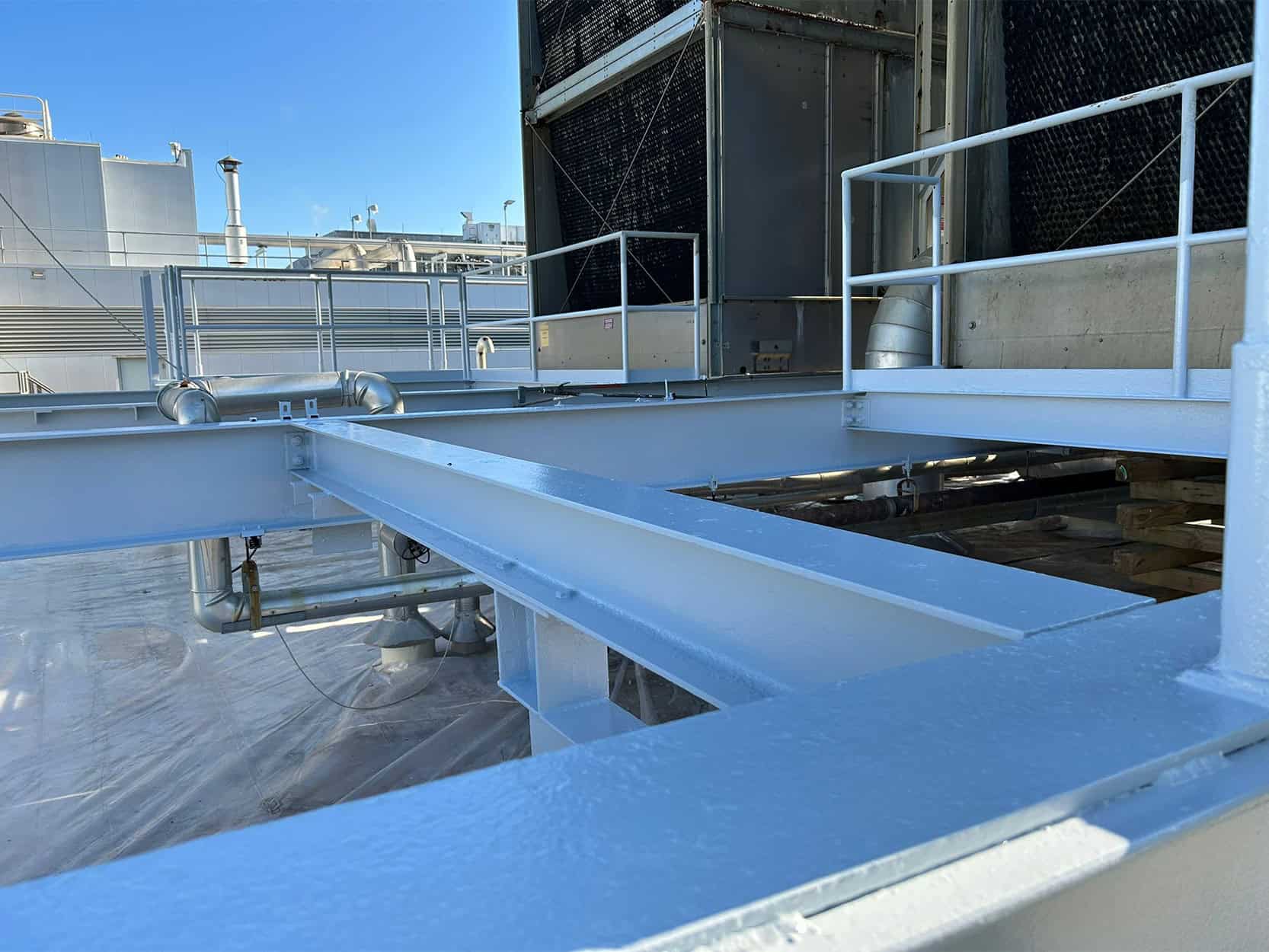
Coatings exposed to direct sunlight, temperature swings, and outdoor weathering face a different failure mode. Chalking, fading, and gloss loss driven by ultraviolet breakdown rather than chemical attack. Polyurethane topcoats resist UV degradation far better than epoxy, which is why exterior structural steel and rooftop equipment typically get a polyurethane finish coat regardless of what’s underneath it. Skipping that UV-resistant topcoat on an outdoor system is one of the most common specification mistakes facility teams run into.
Mechanical Abrasion and Impact
Warehouse floors, loading dock aprons, and areas with regular forklift or foot traffic need coatings built to resist wear, impact, and surface scuffing without breaking down. Epoxy systems, particularly broadcast and flake applications, hold up well here because of their hardness and build thickness. A facility installing new flooring for a high-traffic distribution center needs that abrasion resistance built into the spec from day one.
Combination and Immersion Exposure
Many facilities don’t face a single exposure category in isolation. A wastewater basin might combine constant immersion with chemical exposure and outdoor UV all at once, and a coating built for just one of those conditions will underperform against the other two. This is where a generic product recommendation breaks down, and why exposure analysis has to happen before system selection.
Epoxy vs. Polyurethane: Two Coatings, Two Different Jobs
Epoxy delivers hardness, chemical resistance, and strong adhesion to properly prepared steel or concrete, which makes it the right choice for a primer or intermediate coat. Polyurethane delivers flexibility, UV stability, and gloss retention, which makes it the right choice for a topcoat exposed to sunlight and weather.
The epoxy vs polyurethane industrial coating decision usually is about sequencing, with epoxy underneath for protection and adhesion and polyurethane on top for UV resistance and long-term appearance. Systems that use both in the correct order consistently outperform single-product systems trying to do a job they were never engineered for.
QC Commercial’s high-performance coatings crews handle that system selection alongside surface preparation and application, working from novolac epoxies to polyurethane topcoats across NC industrial and commercial facilities.
When Novolac Epoxy Belongs in the Coating Spec
Standard epoxy performs well against everyday chemical splash and mild exposure, but some environments call for something more resistant. That’s where novolac epoxy enters a coating spec, and knowing when to reach for it keeps a facility from either overpaying for capability it doesn’t need or underspecifying protection it can’t afford to lose.
Aggressive Chemical Processing Environments
Facilities handling concentrated acids, strong solvents, or high-temperature chemical processing need the cross-link density that novolac vinyl ester epoxies provide. These systems resist chemical attack at a level standard epoxies can’t match, which is why they show up most often in chemical processing plants, secondary containment for aggressive chemicals, and specialized applications where a coating failure means a shutdown.
Novolac vs. Standard Epoxy vs. Polyurethane
The novolac epoxy vs polyurethane coating comparison isn’t really a fair fight, because they solve different problems. Novolac is a chemical-resistance specialist built for the harshest processing environments, while polyurethane is a weathering and flexibility specialist built for exterior exposure. A facility might use novolac as an interior tank lining and polyurethane as an exterior topcoat on the same structure, and neither choice competes with the other.
The Standard Exterior Steel System: Zinc, Epoxy, and Polyurethane
Outdoor structural steel, from pedestrian bridges to exposed framing, follows a well-established three-coat approach that most engineers already recognize. Getting each layer right matters more than any single product choice.
- Zinc-rich primer: bonds directly to blast-cleaned steel and provides galvanic, sacrificial corrosion protection at the metal surface.
- Epoxy intermediate coat: builds film thickness, adds chemical and moisture resistance, and seals the zinc primer from the environment.
- Polyurethane topcoat: delivers UV stability, gloss retention, and the finished appearance the structure needs to hold color for years, not months.
This zinc, epoxy, polyurethane sequence has become the default specification for exterior steel across industrial and commercial facilities because each layer does a job the others can’t, and skipping or substituting a layer is one of the fastest ways to shorten a system’s service life.
How to Choose Industrial Coating Systems for Your Facility
Once the exposure environment is defined and the coating type is narrowed down, the remaining risk sits with the contractor doing the specification and the application. Knowing how to choose industrial coating for a specific facility comes down to the questions you ask before signing a contract, not just the product listed on the data sheet.
Questions to Ask Before You Sign
- Which coating manufacturers does the contractor have direct relationships with, and does that affect the manufacturer’s warranty passing through to you?
- Who verifies mil thickness, cure times, and ambient conditions during application, and is that documented in writing?
- Has the crew applied this specific coating system, including novolac or polyurethane products, on a project of comparable scope?
- What happens if a documented specification, from surface preparation through final coat, isn’t followed exactly?
A contractor who can answer all four without hesitation has the process discipline that keeps industrial coating systems performing to spec long after the crew leaves the site.
Get the Right Coating System for Your Facility
Choosing the right industrial coating systems is about matching primer, intermediate coat, and topcoat to the specific chemical, UV, abrasion, or immersion conditions a surface will face over its service life, and confirming the contractor applying it has the documentation and process discipline to make that specification hold up.
QC Commercial has been specifying and applying industrial coating systems across North Carolina since 2002, working with industry-leading manufacturer partners to match novolac epoxies, polyurethanes, and everything between to the facilities that need them.
Reach out and talk through what your surface is actually up against.